

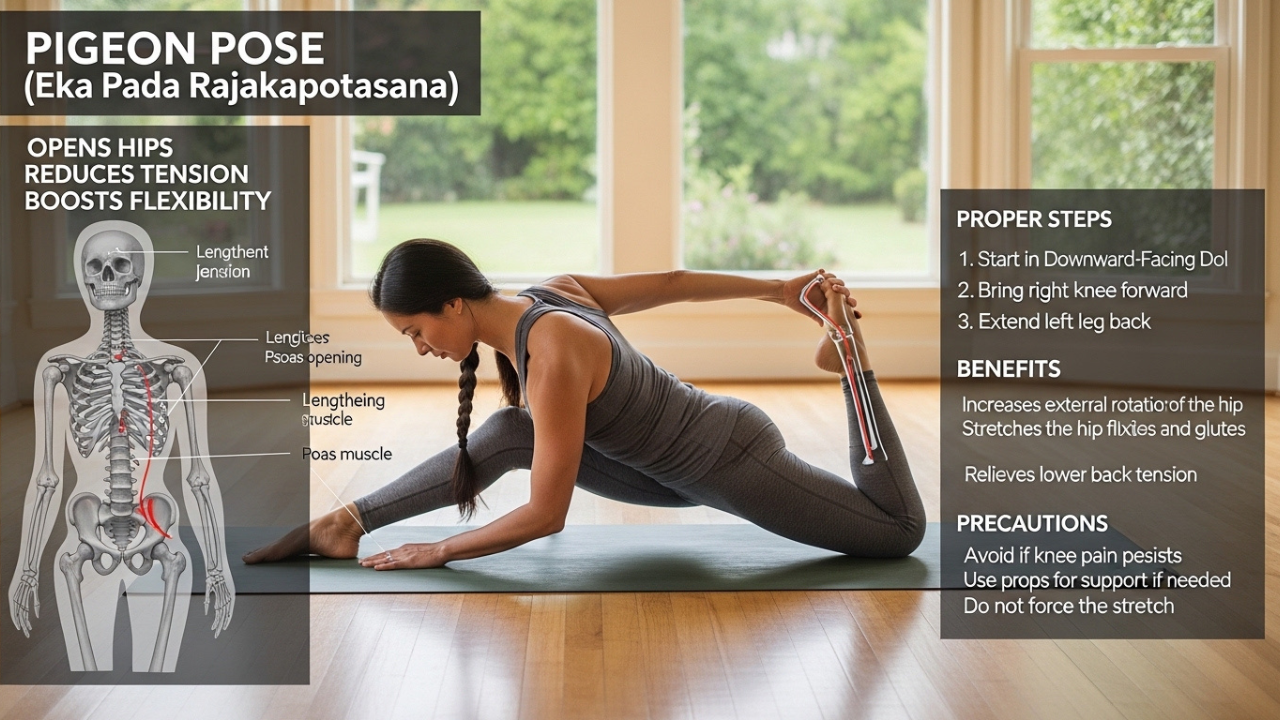
Are you looking to unlock the secrets of flexibility and relief in your hips and lower back? If so, pigeon pose yoga might just be your go-to solution. This powerful asana, known as Eka Pada Rajakapotasana in Sanskrit, is more than just a pretty position—it’s a gateway to deeper stretches and enhanced mobility. Whether you’re an experienced yogi or a curious beginner, incorporating this pose into your routine can work wonders for alleviating tension and tightness.
Imagine sinking into that deep stretch after a long day of sitting at your desk or powering through another workout. The benefits extend beyond mere physicality; they touch on emotional release too. Pigeon pose encourages us to let go of stress while grounding ourselves in the moment. So roll out your yoga mat and get ready to explore how pigeon pose can transform not only your practice but also how you feel every day!
Pigeon Pose Yoga Benefits for Hips and Lower Back
Pigeon pose yoga is renowned for its ability to address tightness in the hips and lower back. As you sink into this deep stretch, you’ll notice how it opens up the hip flexors and glutes, providing relief from tension that often accumulates throughout the day. This asana also promotes better circulation, which helps lubricate joints and ease stiffness.
Additionally, pigeon pose encourages spinal alignment and flexibility. By stretching out the lower back while inviting a gentle twist through your spine, you support better posture both on and off the mat. Over time, regular practice can help alleviate discomfort associated with sedentary lifestyles or strenuous activities.
Moreover, engaging in this pose nurtures emotional release. The hips are often referred to as storage areas for stress; thus releasing them can lead to increased feelings of lightness and freedom. Practicing pigeon pose may just provide that much-needed mental clarity we all seek amidst our busy lives.
By incorporating pigeon pose yoga into your routine consistently, you’re likely to see improvements not only in physical health but also in overall well-being. Your journey toward enhanced mobility has never been more inviting!
The Benefits of Pigeon Pose (Eka Pada Rajakapotasana)
Pigeon Pose, known as Eka Pada Rajakapotasana, is a powerful yoga posture that offers numerous benefits for both the body and mind. This pose primarily targets the hips and lower back, making it an excellent choice for those seeking relief from tightness in these areas. As you sink into this stretch, you’ll likely feel a deep release that can alleviate discomfort.
One of the most notable advantages of Pigeon Pose is its ability to improve flexibility. Regular practice allows your hip flexors and glutes to open up more thoroughly over time. Enhanced flexibility not only aids in daily activities but also contributes positively to various physical pursuits like running or dancing.
Additionally, Pigeon Pose encourages better circulation in the lower body. Improved blood flow helps nourish muscles and joints while reducing tension built up from prolonged sitting or standing throughout the day. With increased circulation comes enhanced range of motion too.
Moreover, this pose promotes emotional well-being by releasing pent-up stress and anxiety stored within tight muscles. Many practitioners find that sinking into Pigeon Pose fosters a sense of calmness, helping them connect with their inner self during their yoga practice.
Common Pigeon Pose Variations
Pigeon Pose has several variations that can cater to different levels of flexibility and comfort. One popular option is the Reclined Pigeon Pose, where you lie on your back instead of balancing on your hands. This modification allows for a deeper stretch while offering support, making it ideal for those new to yoga or with limited mobility.
Another variation is the King Pigeon Pose, which adds an element of challenge by incorporating a backbend. In this pose, one foot remains in front while you reach back to grab the other foot with your hand. This deepens the stretch in your hips and opens up your chest, enhancing both strength and flexibility.
For practitioners seeking a gentler approach, there’s the Supported Pigeon Pose. Using props like blocks or cushions under the hips provides additional support. This makes it easier to maintain alignment without straining any muscles.
Some yogis enjoy practicing Half Pigeon Pose as an alternative. Here, instead of extending one leg straight behind you, you keep it bent at 90 degrees in front of you. It still targets similar muscle groups but offers a slightly different experience altogether.
4 Common Mistakes in Pigeon Pose
One common mistake in Pigeon Pose is forcing the front leg into position. This can lead to discomfort and strain, especially if your hips are tight. Instead of jamming your knee or ankle into alignment, take it slow and allow your body to adjust gradually.
Another frequent error is collapsing the torso forward without support. While folding forward might feel natural in this pose, it often results in rounding the spine. Focus on maintaining a long spine by keeping your chest lifted and engaging your core for stability.
Many practitioners overlook their back leg’s positioning as well. Allowing the back foot to splay out can create instability and tension in the lower back. Keeping that foot flexed with strong engagement helps protect against injury while enhancing balance.
Holding Pigeon Pose too long without awareness can lead to overstretching or muscle fatigue. Listen to your body’s signals; it’s better to come out early than push through pain. Mindful practice will help you reap more benefits over time while ensuring safety during each session.
Precautions to Take During Your Practice
When practicing pigeon pose yoga, it’s essential to listen to your body. If you feel sharp pain or extreme discomfort, ease out of the pose. Modify your approach rather than pushing through the pain, as this can lead to injury.
Ensure that your hips are square and aligned properly. Misalignment can strain both your lower back and hips. Use props like blocks or cushions if necessary for support during the stretch—this will help maintain stability and comfort.
Be mindful of any pre-existing conditions such as sciatica or knee injuries. If you’re unsure whether it’s safe for you, consult a healthcare professional before attempting pigeon pose yoga.
Practice slowly and with intention. Rushing into the pose may compromise form and increase risk factors associated with improper alignment. Focus on breathing deeply throughout the posture; this promotes relaxation while allowing for deeper stretches without forcing anything too aggressively.
3 Tips for Practicing Pigeon Pose
To get the most out of your pigeon pose yoga practice, here are three essential tips to enhance your experience and benefits.
First, focus on your breath. A steady and deep breathing pattern can help you relax into the pose. As you inhale, visualize lengthening through your spine; as you exhale, allow yourself to sink deeper into the stretch. This connection between breath and movement will create a more meditative state during your practice.
Second, listen to your body. Each person’s flexibility varies significantly. If you feel any discomfort or pain in either hip or lower back while attempting this pose, don’t push it too far. Modify the position with props like blocks or pillows for support until you’re ready for deeper stretches without straining.
Warm up properly before diving into pigeon pose yoga. Engaging in some gentle hip openers and stretches beforehand can prepare your muscles for this demanding posture. Incorporating poses like downward-facing dog or happy baby can increase blood flow and reduce tension in those areas.
By following these tips, you’ll be better equipped to safely enjoy all that pigeon pose has to offer for hips and lower back comfort.